

Office Address:
67-10 Fresh Pond Road Ridgewood, NY 11385


Passed the School Eye Exam but Still Struggling? Why Parents Are Switching to Myopia Control Lenses
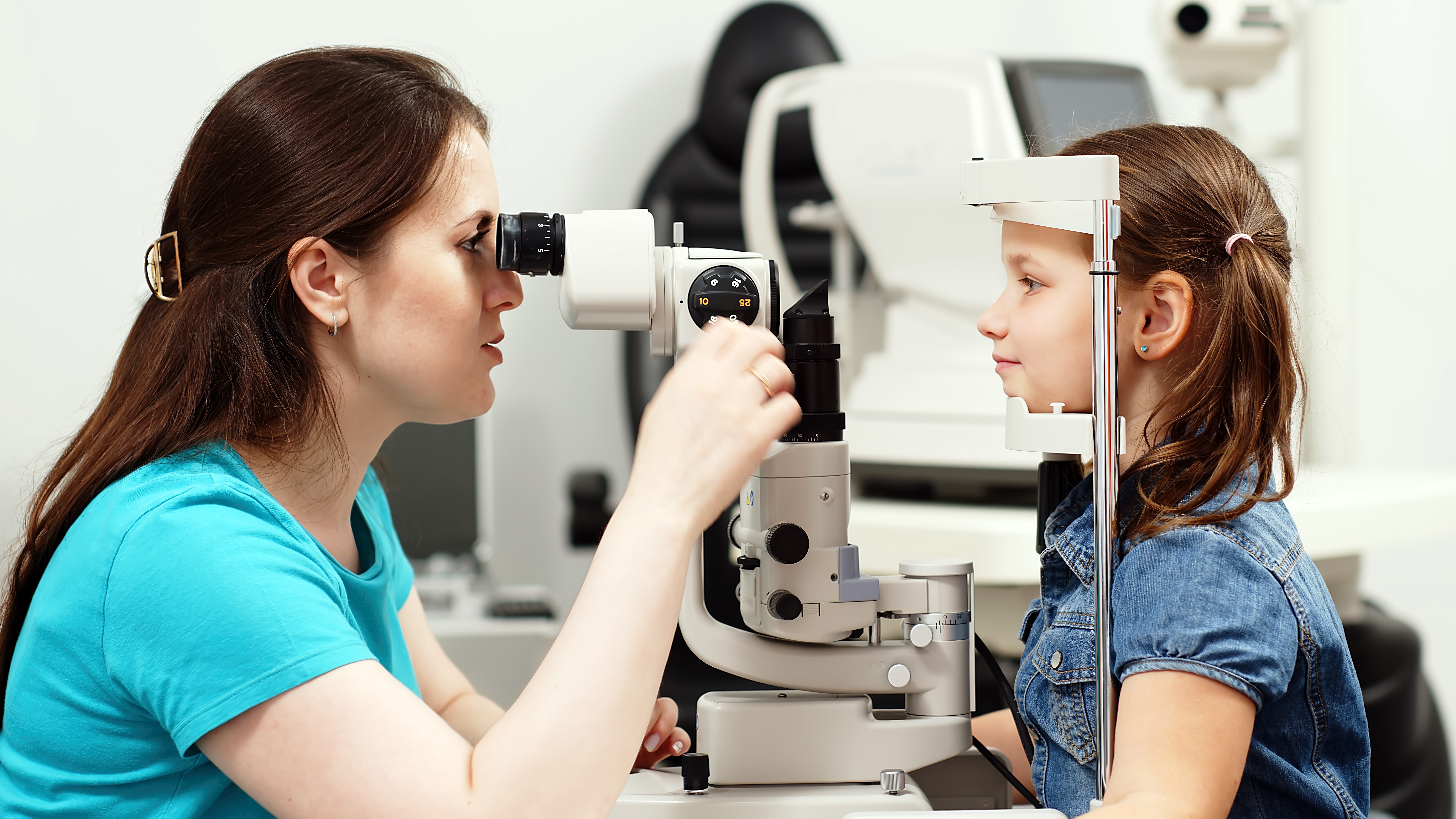
Your child passed their school vision screening, so their eyesight must be fine - right? Not necessarily. School screenings can identify some obvious vision concerns, but they are not a substitute for a comprehensive eye exam. Headaches, a decline in grades, poor attention in class, persistent trouble seeing the board, and squinting may point to problems that are not able to be identified at most screenings. At Community Eye Care, we help families identify more than just myopia (trouble seeing in the distance). Early identification with a comprehensive pediatric eye exam can change the trajectory of childrens' lives with our cutting edge treatment options designed to do more than simply correct blurry distance vision.
Myopia
Myopia (nearsightedness) is the most common school age vision problem. A school eye exam or vision screening generally focuses on whether a child can see clearly at a certain distance. Due to how quickly vision can change in school age children, a child may pass a screening, but during the school year, they will still experiencing vision changes that affect learning, sports, and everyday activities.
Parents may notice signs such as:
• Squinting to see the board or television
• Sitting closer to screens
• Complaining that distant objects look blurry
• Frequently rubbing or straining the eyes
• Needing stronger glasses prescriptions over time
If these changes are happening, a comprehensive pediatric eye exam can provide a more complete picture of your child's vision and eye health.
Standard Glasses Correct Myopia but Do Not Control It
Traditional glasses help children with myopia see distant objects clearly, but standard lenses do not typically address the underlying progression of nearsightedness.
Myopia often begins during childhood and can continue progressing as a child grows. As the prescription becomes stronger, the long-term risk of certain eye conditions can also increase. This is why more parents are asking about myopia control rather than relying only on updated glasses prescriptions.
How Myopia Control Lenses Can Help
Myopia control treatments are designed to slow the progression of nearsightedness while providing the vision correction children need. At Community Eye Care, myopia management options may include Essilor Stellest Lenses, MiSight 1 Day contact lenses, orthokeratology, and low-dose atropine.
Stellest Lenses offer a glasses-based option for myopia management. These specialized spectacle lenses correct blurry distance vision while using highly aspherical lenslets to help slow the progression of myopia. They may be a helpful choice for children and families who prefer eyeglasses rather than contact lenses.
MiSight 1 Day lenses are soft daily disposable contact lenses designed specifically for myopia control in children. Orthokeratology, commonly called Ortho-K, uses specially fitted lenses worn overnight to temporarily reshape the cornea and provide clearer daytime vision. Low-dose atropine may also be recommended alone or as part of an individualized treatment plan.
When Should Parents Consider Myopia Control?
Myopia control may be worth discussing if your child's nearsightedness is progressing from year to year or if stronger prescriptions are becoming a regular part of their eye care. Starting treatment while a child is still growing may provide an opportunity to manage that progression earlier.
Our eye doctors can evaluate your child's prescription, eye health, age, lifestyle, and vision needs before recommending an appropriate approach. Whether Stellest Lenses, MiSight, Ortho-K, low-dose atropine, or another approach is appropriate depends on the individual child. The goal is not simply clearer vision today - it is helping manage myopia as your child grows.
Schedule your child's myopia control evaluation with Community Eye Care to learn which treatment option may be right for their vision needs. Contact one of our seven locations: Drs. Sehy & Jones Community Eye Care - (217) 342-2672; Taylorville Community Eye Care - (217) 287-2020; Pana Community Eye Care - (217) 562-2512; Mattoon Community Eye Care - (217) 258-8466; Macon County Community Eye Care - (217) 875-5900; Mt. Zion Community Eye Care - (217) 615-2510; Great Rivers Community Eye Care - (618) 494-4030.


Office Hours
- Monday Closed
- Tuesday 10:00am - 6:00pm
- Wednesday 10:00am - 5:00pm
- Thursday 10:00am - 6:00pm
- Friday 10:00am - 5:00pm
- Saturday 10:00am - 6:00pm
- Sunday Closed
© 2026 Fresh Pond Eye Care. All Rights Reserved - Accessibility Statement - Privacy Policy - Sitemap
Powered by

